Install and open
Get the current stable release from the official releases page. Check its platform notes before installing; a beta may also appear above the stable release.
Official releases ↗INDEPENDENT LEARNING GUIDE · FREE SOFTWARE
A practical home for people learning and using QualCoder: from your first coded interview to a defensible analysis of a complex project.
QualCoder.net is an independent educational resource, not the official QualCoder project.
01 / GET ORIENTED
CAQDAS means computer-assisted qualitative data analysis software. QualCoder helps organize and retrieve evidence; your research question and judgment give it meaning.
Get the current stable release from the official releases page. Check its platform notes before installing; a beta may also appear above the stable release.
Official releases ↗Import one or two short sources. Give files clear names and keep the working project on a local drive. Make a separate backup copy regularly.
Read the documentation ↗Start with a few meaningful codes. Note what each code includes and excludes. Revisit early passages after the codebook changes.
See the workflow ↓02 / THE WORK
Use these as checkpoints, whether you favor reflexive thematic analysis, grounded theory, content analysis, or a mixed approach. Adapt each step to your method.
Write the purpose, unit of analysis, sampling boundaries, and your starting assumptions.
Use consistent file names, remove identifiers when appropriate, and record source context.
Write first impressions in a journal. Pilot a small sample before building a large code tree.
Code meaningful segments; attach memos explaining ambiguous or consequential choices.
Inspect uncoded text, competing readings, overlaps, exceptions, and differences across cases.
Use reports and retrieved passages to connect claims back to sources; preserve an audit trail.
Pilot first · keep a reflexive journal · define codes in plain language · distinguish description from interpretation · use cases early · avoid a needlessly deep code tree · inspect uncoded material · seek negative cases · export checkpoints · back up a closed project.
03 / QUALCODER + CHATGPT
QualCoder includes AI-assisted features, and ChatGPT can serve as a separate coding helper, critic, and editor. Keep the source material, the model's suggestion, and your final decision distinguishable.
TRY THIS PROMPT
“Here is my research question, code definition, and a de-identified passage. Offer two plausible coding interpretations, evidence for and against each, and one question I should answer before deciding. Do not make the final coding decision for me.”
Before sending participant material to an AI service, follow your consent, institutional review, confidentiality, and data handling requirements. Document which tool and prompt you used, what it returned, and what you changed.
04 / THE READING DESK
Three covers shared by Professor Halstead: methods, hands-on practice, and an emerging AI-assisted workflow.
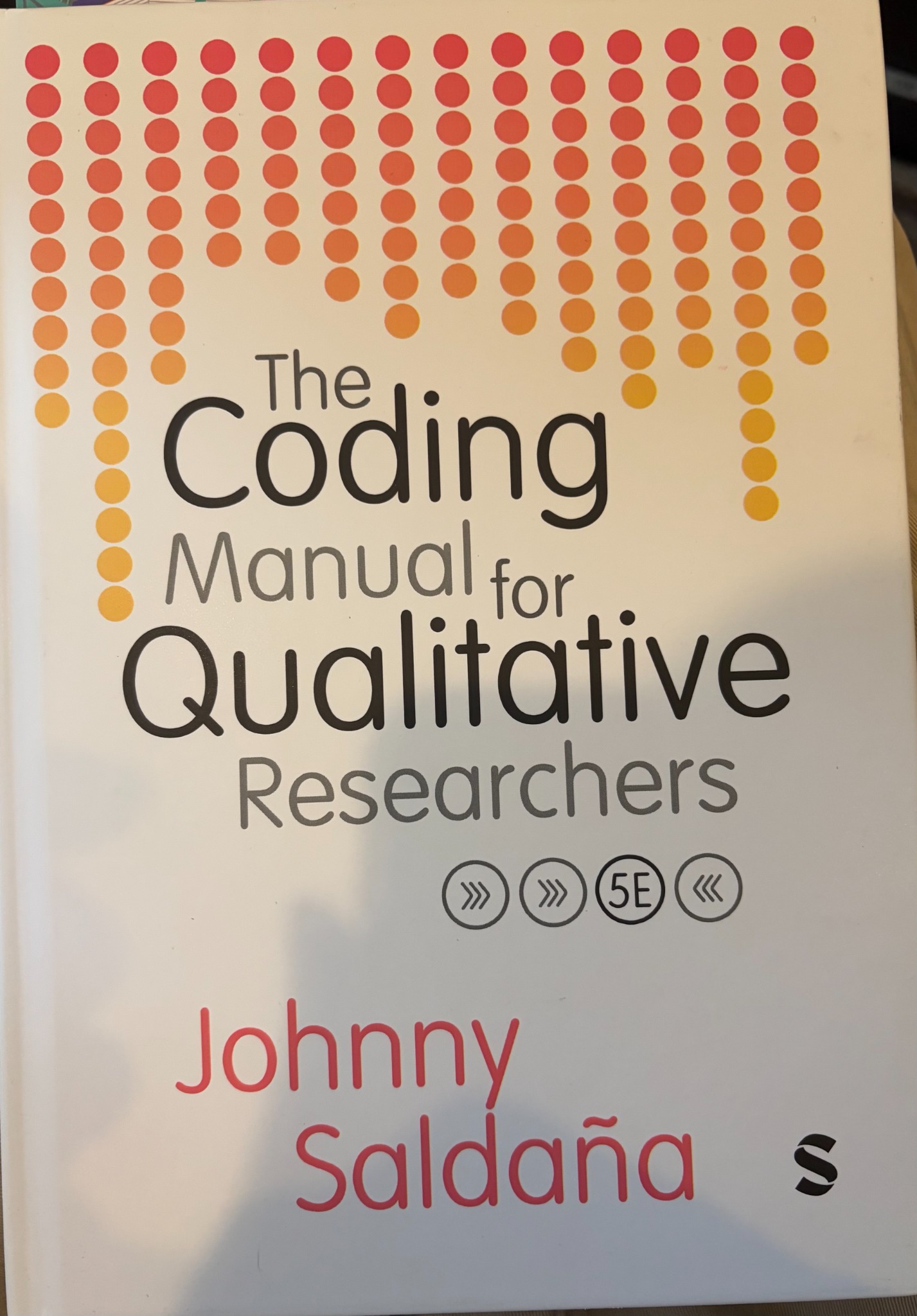
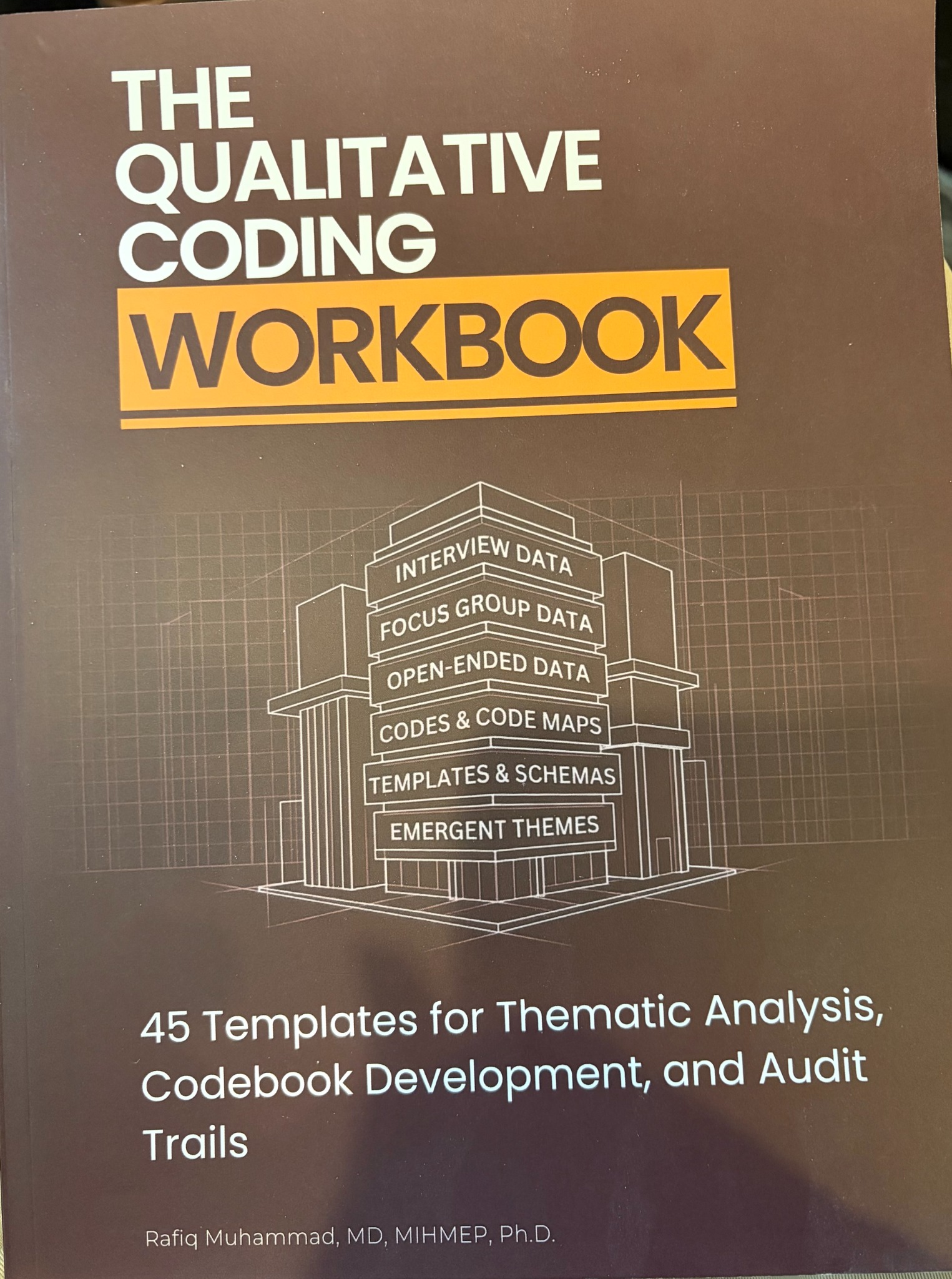
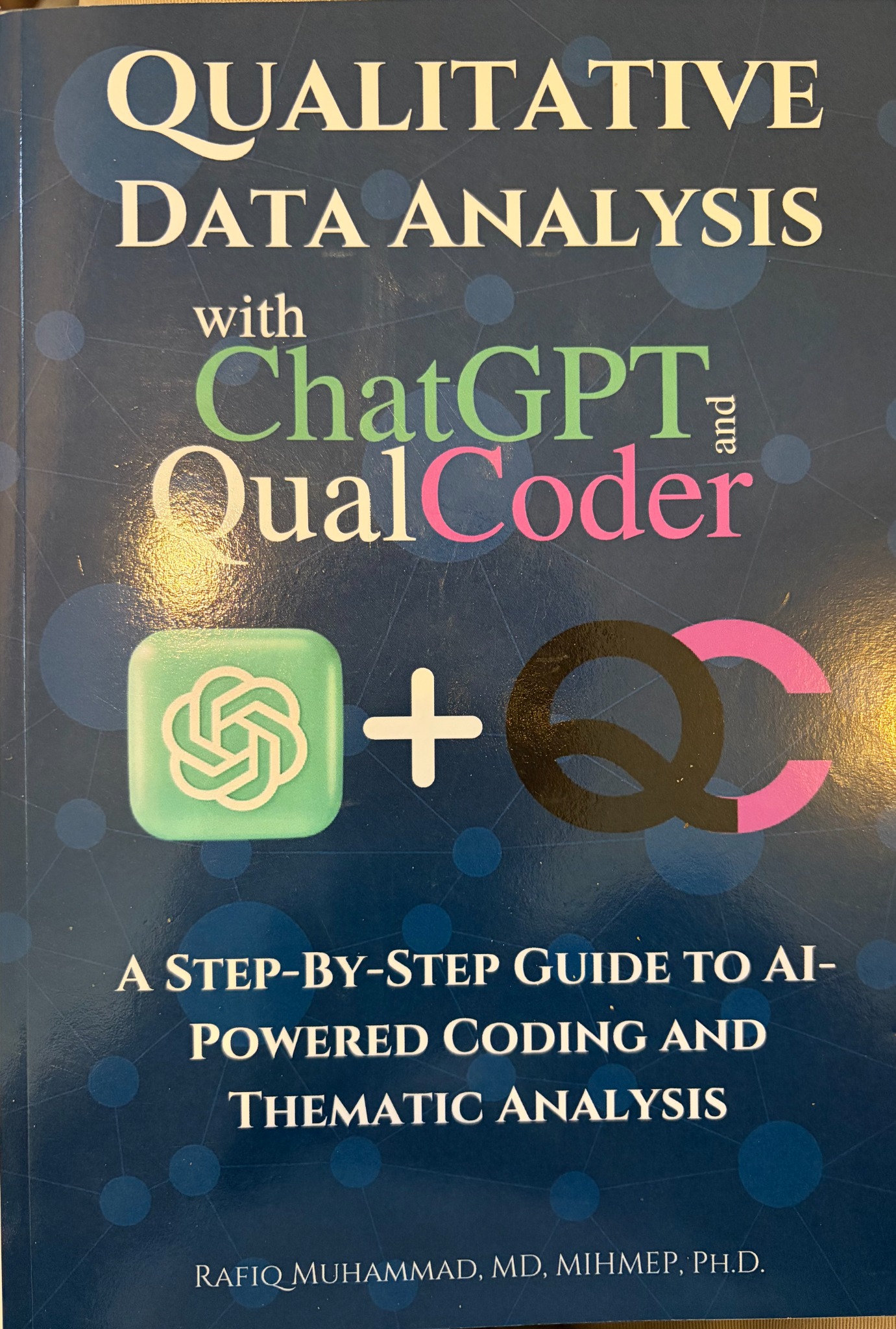
Professor Halstead observes that QualCoder is absent from his copy of Saldaña’s fifth edition; this is his observation, not an independently verified survey of the book.
05 / KEEP LEARNING
For installation details and software behavior, rely on the project’s own documentation. The older wiki is useful background, but its newer documentation is the main reference for recent versions.
Saldaña, The Coding Manual for Qualitative Researchers
Braun & Clarke, Thematic Analysis: A Practical Guide
For a broader CAQDAS perspective, compare documentation and training resources for other packages such as MAXQDA, ATLAS.ti, and NVivo.
ABOUT THIS PROJECT
QualCoder.net was created by Professor Tommy Halstead (@ModelSimProfessor) for colleagues at Purdue Global, students at Harvard and GCU, tutoring clients across more than 200 colleges and universities, and diplomats, executives, mediators, negotiators, and arbitrators.
Questions? Write to Tom.Halstead@my.gcu.edu or BahaiHalstead@gmail.com. So much for fooling the bots. ;=)